Description
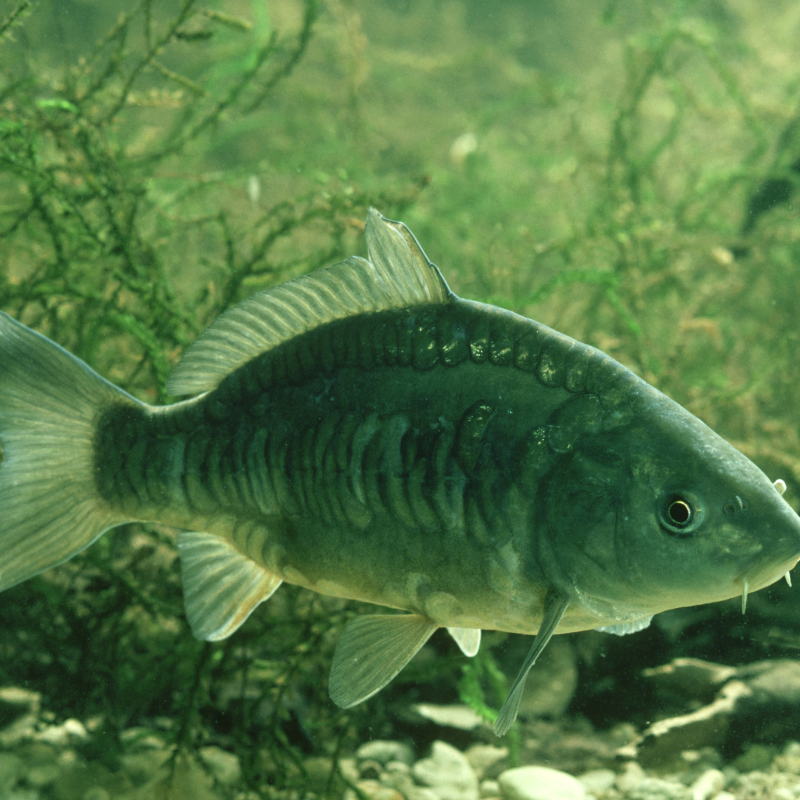
Mirror Carp Mirror Carp, or Cyprinus carpio, is a subspecies of the common carp that is commonly found in the UK and Europe. They are native to much of Europe and can also be found in the Caucasus and Central Asia. Mirror Carp are very popular fish for sport fishermen, and are widely distributed around fisheries and reserves nationwide.The name “Mirror Carp” originates from their scales similarity to mirrors. They can grow in excess of 25kg – the last few British record fish have all been mirror carp. Mirror carp is a coldwater fish suited to larger outdoor freshwater garden ponds or lakes. Mirror Carp can be grown-on in smaller ponds or large indoor aquariums until they reach maturity, and transferred to a large pond. Mirror carp can tolerate a wide range of water conditions and temperature ranges.What is the difference between Mirror Carp and Common Carp?The difference between mirror and its wild ancestor, the common carp, is mainly the presence of the large mirror-like scales. How big do Mirror Carp grow?Mirror Carp can grow up to 3ft or 90cms, and can weigh as much as 25kgs! Captive mirror carp will easily achieve at least half this size in a domestic garden pond setting.FeaturesApprox. supplied size: 2-3″ / 5-7cmMaximum size: 36″ / 90cmOrigin: Europe, Central AsiaTemperament: Generally peacefulLighting requirement: lowIdeal number kept together: 1+Water ConditionsOur conditions: pH 7.5, temp 15 °CIdeal pH: 6.0-8.0Water flow: low Temperature: 2-30 °C (outdoor)Ease of CareEasy. Very hardy, can grow very large so will need a large pond habitat.FeedingFeed a mixture of pond flake and pellets. If you want to achieve growth use a high-protein pellet. Feed wheatgerm pellet in the winter until feeding stops.Breeding Egg layers. Mirror Carp will commonly spawn through spring and summer, and are commonly farmed throughout the UK.Life SpanMirror Carp can live up to 20 years in perfect conditions.Photo is for illustration only – one supplied.For more information on general fishkeeping and our shipping procedures click here.